Indoor Herb Garden: A Complete Beginner’s Guide
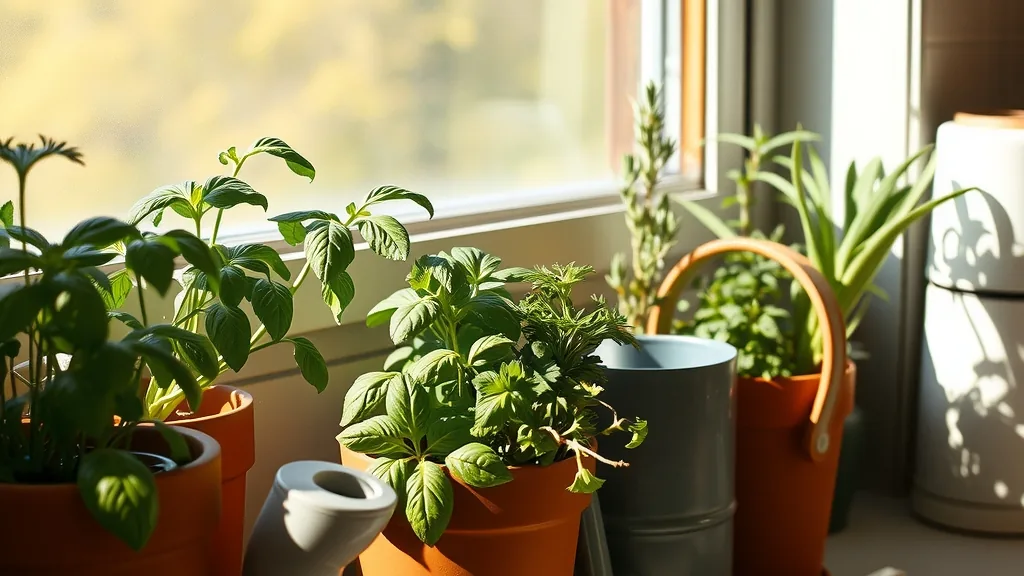
An indoor herb garden is one of the few kitchen projects that pays for itself in a season, but most attempts fail for the same three reasons: not enough light, too much water, and pots that are too small. Fix those and parsley, basil, mint, and chives will keep producing through winter. This guide covers which herbs are worth growing inside, how to set up light and drainage, and how to harvest so plants keep growing instead of collapsing.
Choose Herbs That Tolerate Indoor Conditions
Not every herb belongs on a windowsill. These are the reliable ones for beginners:
| Herb | Light needed | Watering | Difficulty |
|---|---|---|---|
| Basil | 6+ hours direct sun | When top soil is dry | Easy, but cold-sensitive |
| Parsley | 4 to 6 hours | Keep evenly moist | Easy from transplant |
| Chives | 4 to 6 hours | Moderate | Very easy |
| Mint | 4 hours, tolerates less | Consistently moist | Easy, spreads aggressively |
| Thyme | 6 hours, likes dry air | Let soil dry between watering | Moderate |
| Rosemary | 6+ hours, good airflow | Sparse; hates wet feet | Moderate to hard indoors |
| Cilantro | 4 to 6 hours, cool | Moderate | Short-lived, sow repeatedly |
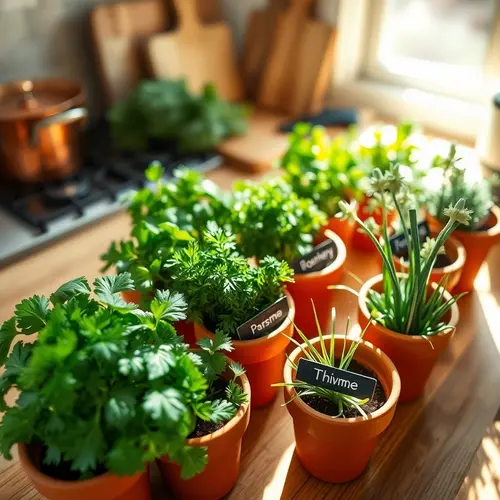
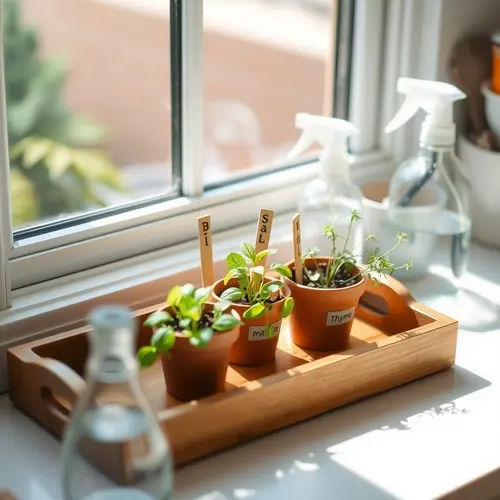
Start with three: basil, parsley, and chives. They forgive mistakes, produce quickly, and cover most cooking needs. Add rosemary only if you have a bright, dry spot and are willing to water carefully.
Light Is the Limiting Factor
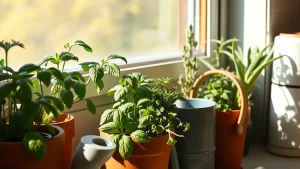
Herbs are full-sun plants. A windowsill that looks bright to your eye may deliver a fraction of outdoor light, especially in winter. South-facing is best in the northern hemisphere; east is second; north usually fails without a grow light.
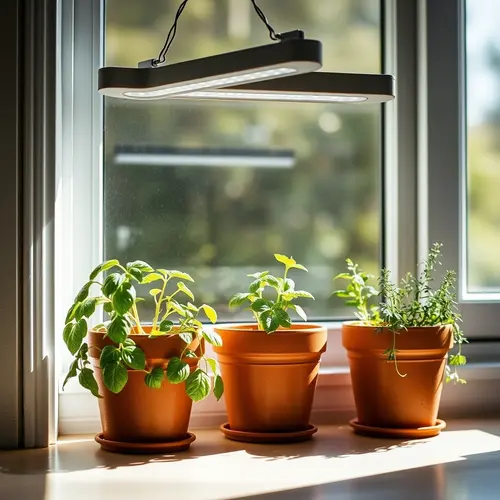
Signs of insufficient light: pale or yellowing leaves, long stems with wide gaps between leaves, and slow growth despite adequate water. If you see these, add a small LED grow light 20 to 30 cm above the plants for 12 to 14 hours a day. A timer removes the guesswork.
Rotate pots a quarter turn every few days so stems grow evenly rather than leaning into the glass.
Soil, Pots, and Drainage
Use a light potting mix, not garden soil. Indoor containers need air around the roots, and garden soil compacts into a dense block that stays wet. A mix with perlite or coco coir drains better and weighs less.
- Drainage holes are mandatory. A decorative pot without holes is a slow death sentence.
- Size matters. A 15 cm pot suits basil or parsley for a season; mint and rosemary prefer 20 cm.
- Feed lightly. A diluted liquid fertiliser every two to three weeks during active growth is enough. Overfeeding produces soft, flavourless leaves.
If you want to reuse containers, wash them with hot soapy water and rinse well before planting, especially after a plant has died.
Watering Without Overwatering
Overwatering kills more indoor herbs than drought. Roots need oxygen, and constantly wet soil suffocates them. The finger test is reliable: push a finger 2 cm into the soil. If it is dry, water until it drains from the bottom; if it is damp, wait.
Empty the saucer after ten minutes. Standing water plus a warm room is the fastest route to root rot and fungus gnats. Bottom watering, where the pot sits in a tray of water for twenty minutes, is a good option for herbs that dislike wet leaves, such as basil.
Harvesting So Plants Keep Producing
Harvesting is pruning. Done correctly, it makes plants bushier; done wrong, it stalls them for weeks.
- Basil: pinch stems just above a pair of leaves, always leaving at least two sets below the cut. Remove flower buds as soon as they appear.
- Parsley: cut outer stems at the base, never strip the crown.
- Chives: snip leaves about 5 cm above the soil, and never take more than a third at once.
- Mint: pinch tips regularly; it responds by branching.
- Thyme and rosemary: harvest soft new growth, not old woody stems.
Take from the top and the outside. The inner and lower growth is what keeps the plant fed.
Pests and Problems
Fungus gnats are the most common indoor herb pest. They breed in wet soil, so let the surface dry and use yellow sticky traps. Small webs and speckled leaves suggest spider mites, which thrive in dry, still air; a shower of water and better airflow usually helps.
Yellow lower leaves with wet soil means overwatering. Brown crisp edges usually mean dry air or inconsistent watering. White powder on leaves is powdery mildew, common on mint in humid rooms; improve airflow and remove affected leaves.
Isolate any new plant for a week before putting it near your others, and inspect the undersides of leaves when you buy it. Most infestations arrive with a new pot, not from nowhere.
A Simple Seasonal Plan
Spring: start basil and cilantro, repot survivors, begin light feeding. Summer: harvest often, watch water daily in hot rooms. Autumn: reduce fertiliser, move plants to the brightest window. Winter: expect slower growth, water less, and use a grow light if leaves pale.
If you want to expand beyond culinary herbs, our window plants indoor guide covers foliage plants that tolerate the same conditions, and the successful herb garden guide translates the same principles to an outdoor bed.
For layout and container combinations that work in small kitchens, the herb garden ideas collection is a useful next read.
Which herbs grow best indoors?
Basil, parsley, chives, and mint are the most forgiving. Thyme needs more light and rosemary is difficult indoors without strong sun and airflow.
How much light does an indoor herb garden need?
Four to six hours of direct sun for most herbs, and six or more for basil, thyme, and rosemary. In winter, a small LED grow light for 12 to 14 hours replaces weak window light.
Why are my indoor herbs dying?
The usual causes are too little light, overwatering, and pots without drainage. Check soil moisture 2 cm down before watering and empty the saucer.
Can I use garden soil in pots?
No. Garden soil compacts and stays wet in containers. Use a light potting mix with perlite or coco coir for drainage.